
The GLP-1 Conversation We’re Not Having
GLP-1 Is Having a Moment
Unless you’ve been living under a rock—or perhaps blissfully avoiding social media—you’ve heard about GLP-1 medications. Ozempic. Wegovy. Mounjaro. Zepbound. They’ve gone from medications primarily discussed in diabetes and obesity care to household names. Weight-loss clinics advertise them, celebrities talk about them, friends compare results, and somewhere along the way, GLP-1 became almost synonymous with weight loss.
But there’s something important missing from much of that conversation: GLP-1 isn’t a medication. It’s a hormone your body already makes.
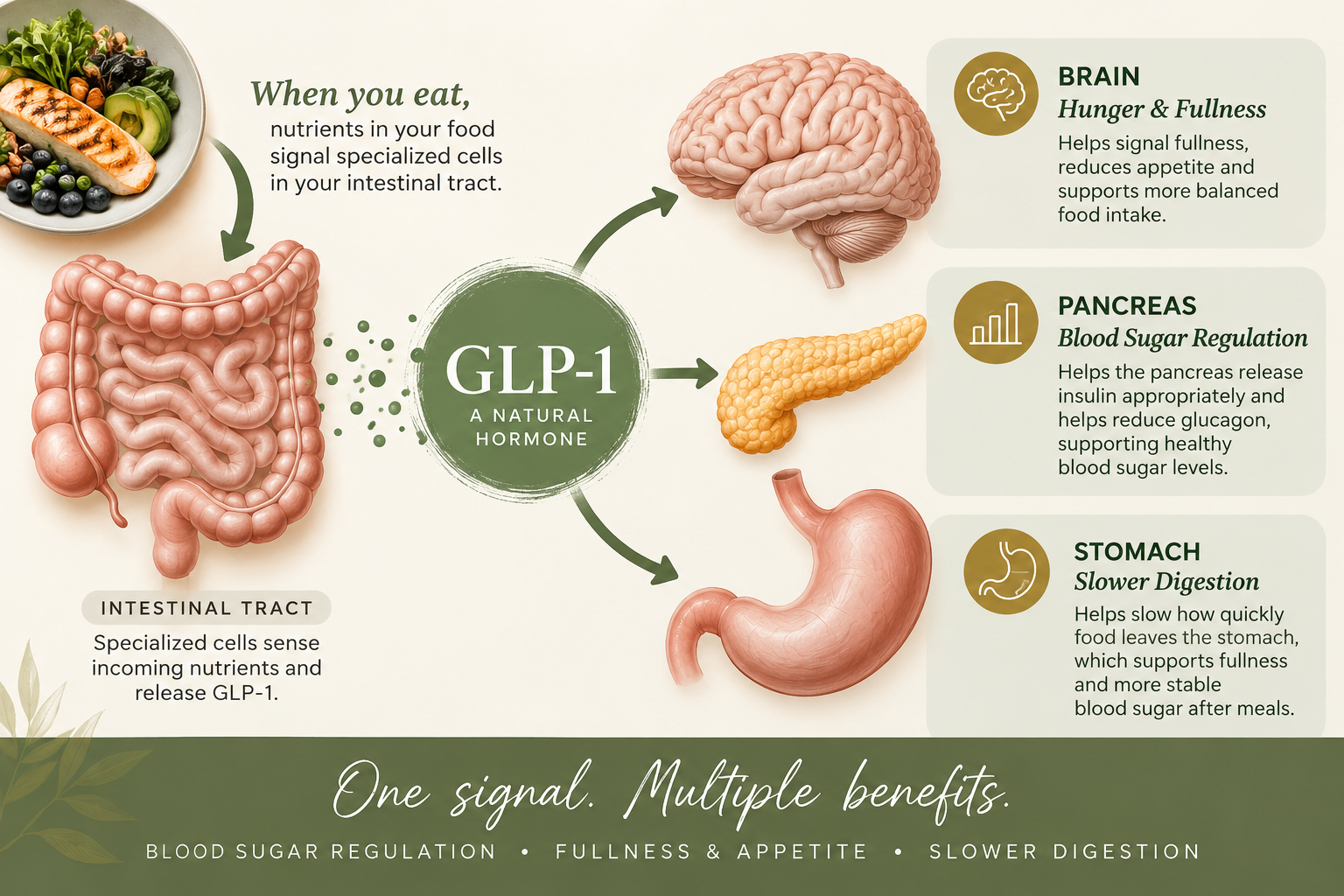
Glucagon-like peptide-1 (GLP-1) is one of the signals released primarily from specialized cells in your intestinal tract after you eat. It helps coordinate what happens next, communicating with your pancreas, digestive system and brain about incoming nutrients, blood sugar, insulin, digestion, hunger and fullness. In other words, pharmaceutical companies didn’t invent the GLP-1 pathway. Your body did.
And that distinction matters to me. I’m not interested in pretending these medications don’t work. They can produce significant weight loss and improve blood sugar regulation, and for some people they may be an appropriate medical tool. But “Does it work?” isn’t the only question worth asking.
I also want to know what exactly the medication is doing, what we’re asking the body to do differently, what the benefits and trade-offs are, and perhaps most importantly: Why might the body’s own systems for regulating glucose, hunger, fullness and metabolism not be working as well as they should in the first place?
That’s the question I want to explore. Not because every prescription is bad, and certainly not because everything labeled “natural” is automatically good. But before we decide that overriding or amplifying a biological signal is the answer, I think it’s reasonable to understand the system we’re trying to influence.
And call me old-fashioned, but I’m rather fond of helping the body remember how to do its job.
Before we ask how to make the body eat less, maybe we should ask why its natural signals for hunger, fullness and metabolism aren’t working the way they were designed to.
Your Body Already Has a GLP-1 System
GLP-1 stands for glucagon-like peptide-1, but you don’t need to memorize that. What matters is that GLP-1 is one of the hormones your body uses to coordinate what happens after you eat. Specialized cells in the intestinal tract sense incoming nutrients and release GLP-1 as part of the conversation between your gut, pancreas and brain.
One of its jobs is helping manage blood sugar. When glucose rises after a meal, GLP-1 helps the pancreas release insulin appropriately while also helping reduce glucagon, a hormone that tells the liver to release stored glucose. Importantly, this happens as part of a coordinated response to food—not as an isolated switch being flipped.
GLP-1 also communicates with the brain about hunger and fullness and can slow how quickly food leaves the stomach. Put those effects together and you can see why this little hormone has suddenly become such a celebrity: it participates in blood-sugar regulation, digestion, appetite and satiety all at once.
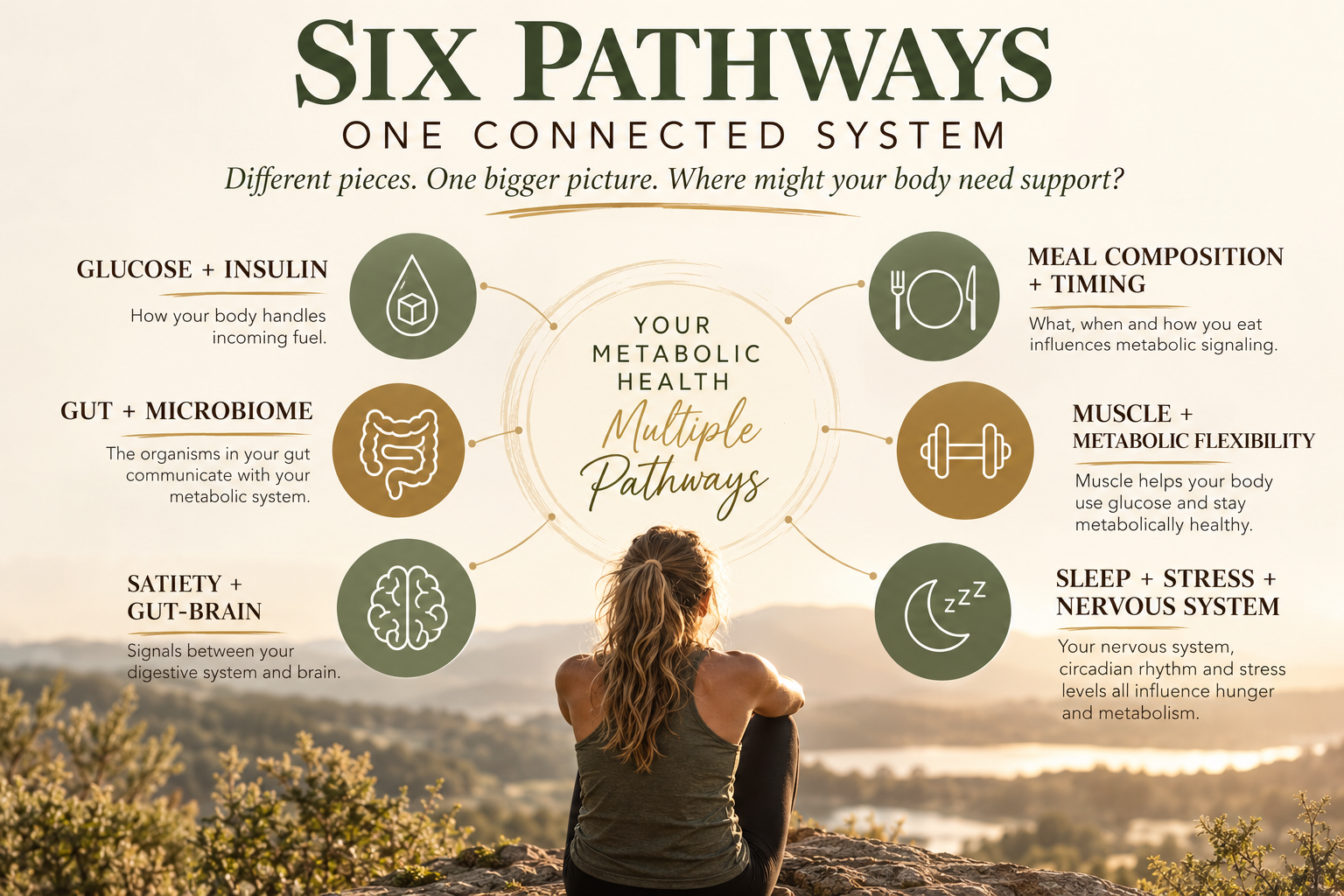
But GLP-1 doesn’t work alone. Its release and effectiveness are influenced by the foods we eat, glucose and insulin regulation, signals from the gut and microbiome, meal timing, and communication between the digestive system and brain. Sleep, movement, muscle and our overall metabolic health affect the larger environment in which all of this is happening.
And here’s something especially important for where we’re headed: your natural GLP-1 is designed to be short-lived. After doing its job, much of it is rapidly broken down by an enzyme called DPP-4. That isn’t a design flaw—it’s part of a tightly regulated signaling system.
Pharmaceutical researchers looked at that short-lived natural signal and asked a fascinating question: What if we could make that GLP-1 message stronger and last much, much longer?
And that is where the story of GLP-1 medications really begins.
So What Are GLP-1 Medications Actually Doing?
GLP-1 medications are generally called GLP-1 receptor agonists. In simple terms, they are engineered molecules designed to activate the same receptor that your natural GLP-1 activates—but with an important difference. Your own GLP-1 signal is brief (and I believe that is how God designed it - on purpose). These medications are specifically designed to resist rapid breakdown and keep stimulating that pathway for much longer (outside God's design).
That prolonged signal is part of why they can be so effective. Depending on the medication, they can increase insulin release when glucose is elevated, decrease glucagon, slow gastric emptying, and affect appetite and satiety centers in the brain. Newer medications can go even further. Tirzepatide—the active ingredient in Mounjaro and Zepbound—activates both GLP-1 and GIP receptors, essentially manipulating more than one of the body’s normal metabolic signaling pathways at the same time.
That begs several questions, but let's ask just one, knowing what I know about human physiology: what happens to the body when food remains in the stomach longer than it should (from that "slow gastric emptying")? Food can sit there and ferment, increasing pressure, pushing up gastric acid into the esophagus, which we know over time can be a major contributor to esophageal cancer. This is just one basic thought exercise showing how important it is to ask "what happens as a result of how this medication works on the all the different body systems?"
And Yes, There Really Is a Gila Monster in This Story
The history of these medications is fascinating, and frankly, I think people deserve to know it. Scientists studying the Gila monster discovered a peptide called exendin-4 in its salivary secretions. Exendin-4 could activate the human GLP-1 receptor but, unlike our own GLP-1, it resisted rapid breakdown.
But the Gila monster discovery helped demonstrate something enormously valuable to pharmaceutical researchers: a molecule could activate our GLP-1 receptor and be engineered—or selected—to remain active far longer than our natural hormone.
And this is where I think we should slow down and ask a bigger question. Pharmaceutical science has become remarkably good at identifying the body’s signaling pathways and finding ways to amplify, imitate or prolong them. That can be tremendously useful medicine. But pharmacologically activating a receptor is not the same thing as restoring the physiology that normally regulates that receptor.
We’ve become very good at engineering molecules that make the GLP-1 receptor listen. But have we become equally interested in asking why the body isn’t sending—or responding to—its own metabolic signals well in the first place?
That’s the part of the GLP-1 conversation I think we need to be having.
The goal shouldn’t only be to make hunger quieter. It should be to understand why the body’s normal signals became so hard to hear.
Powerful Doesn’t Mean Risk-Free
GLP-1 medications can be powerful tools, and their benefits are real. Depending on the medication and the person using it, they can significantly improve blood sugar control, produce substantial weight loss, and in certain populations reduce cardiovascular and kidney risks. I’m not interested in pretending those benefits don’t exist simply because I prefer to look upstream.
But effectiveness and safety are two different questions. These medications deliberately alter powerful metabolic and digestive pathways, and powerful biological effects can come with powerful trade-offs. Nausea, vomiting, diarrhea, constipation and abdominal pain are among the most common side effects. Current FDA prescribing information also includes warnings or precautions involving pancreatitis, gallbladder disease, acute kidney injury related to dehydration, severe gastrointestinal reactions and delayed gastric emptying.
There is also a boxed warning regarding thyroid C-cell tumors. Semaglutide caused these tumors in rodents; whether it causes medullary thyroid cancer in humans remains unknown. Because of that concern, the medication is contraindicated for people with a personal or family history of medullary thyroid carcinoma or Multiple Endocrine Neoplasia syndrome type 2. That distinction matters: I don’t want to turn an animal finding into a proven human outcome, but I also don’t think we should pretend the warning isn’t there.
And What About the Reports of Vision Loss?
This one deserves clarification because it has moved beyond internet rumors and lawsuits. In 2025, the European Medicines Agency reviewed clinical trials, post-marketing reports and epidemiological research involving semaglutide and concluded there was sufficient evidence to identify non-arteritic anterior ischemic optic neuropathy (NAION) as a rare adverse effect. NAION occurs when blood flow to the optic nerve is disrupted and can result in sudden vision loss.
Informed consent should actually be informed. Benefits matter. Risks matter. Your individual health history matters. And when a medication may be used for years rather than weeks, I think asking what else we can do to improve the underlying metabolic environment is not fringe thinking. It’s a perfectly reasonable health conversation, especially when we do not have any longitudinal studies demonstrating the actual risks with long-term use. Back to the esophagus - what if 5 more years down the road we see an uptick in that cancer and one of the main commonalities is the use of this medication!
Ultimately, my question isn’t simply, “How much weight can we lose?” I want to know what happens to the health of the person losing it. These medications are obviously having an effect on more than the pathways God intended with HIS creation and design.

What If We Helped the Body Do More of This for Itself?
After looking at how GLP-1 medications work and the trade-offs that can come with them, I think there’s another reasonable question to ask: What influences our own GLP-1 and metabolic signaling in the first place? Because GLP-1 doesn’t operate in a vacuum, and our bodies aren’t sitting around waiting for someone to invent an injection before they can regulate hunger, blood sugar and digestion.
Food composition matters. Protein and fiber matter. The health of the gut and the organisms living there matter. Blood-sugar and insulin regulation matter. Bitter receptors in the digestive tract participate in signaling. Meal timing and periods without food can influence the larger metabolic environment. Muscle, movement, sleep, stress and circadian rhythm all enter the picture as well. In other words, there are multiple doors into this system, which is exactly why I hesitate when one intervention is presented as though it solves the entire metabolic problem.
This is also where I want to be careful with the word natural. Natural doesn’t automatically mean harmless, and pharmaceutical doesn’t automatically mean evil. My preference for supporting physiology first isn’t based on pretending otherwise. It comes from a much simpler philosophy: when it is reasonable and appropriate, I want to understand what the body is struggling to do and help restore that function rather than immediately bypassing it.
That also means I’m not interested in replacing an injection with a trendy bottle labeled “Natural GLP-1.” If we’re going to ask better questions, then let’s actually ask them. Someone struggling primarily with insulin resistance may need a very different approach from someone with poor satiety signaling, inadequate protein and fiber, a disrupted gut environment, loss of muscle, chronic sleep deprivation, or some messy combination of all of the above. Human beings are inconveniently individual that way.
So instead of asking, “What can I take to increase GLP-1?” I’d rather start with, “Which parts of my own metabolic signaling might need support?” The questions that follow aren’t a diagnostic test, and there is no magic score at the bottom. They’re simply breadcrumbs—clues that can help us start looking in the right direction.
Because the goal isn’t to chase a hormone. The goal is to build a healthier body that knows what to do with the signals it already has.
Where Might YOUR Body Need Support?
This is where we make all of that physiology a little more personal. The questions below are not a diagnostic test, and you’re not looking for a score. Instead, notice which questions make you stop and think, “Well...that sounds familiar.”
You may recognize yourself strongly in one area or see pieces of yourself in several. That’s normal. These systems overlap and communicate with one another, so there usually isn’t one tidy little metabolic culprit wearing a name tag.
As you read, look for patterns rather than diagnoses. The goal is simply to start asking a better question: Where might my body need more support?
1. Glucose + Insulin Signaling
GLP-1 is closely involved in what happens to blood sugar after you eat, so glucose and insulin regulation are an obvious place to look. If your body is having difficulty handling incoming fuel, simply making yourself less hungry doesn’t necessarily address the reason that metabolic dysfunction developed.
Ask yourself:
Do I get sleepy, foggy, shaky or hungry soon after eating?
Do I regularly crave sugar or refined carbohydrates?
Can I eat a carb-heavy meal and somehow be looking for food again two hours later?
Have my fasting glucose, insulin, A1c or triglycerides been trending in the wrong direction?
Have I noticed increasing weight around my middle?
Translation: If several of these sound familiar, I’d be thinking about how efficiently your body is handling glucose and responding to insulin. Before making appetite the enemy, it may make more sense to work on the way your body receives, uses and stores fuel.
2. Gut + Microbiome Signaling
Your gut isn’t merely plumbing. The organisms living there produce compounds—including short-chain fatty acids—that communicate with intestinal cells involved in metabolic and appetite signaling, including GLP-1. What you feed those organisms matters.
Ask yourself:
Is my diet low in fiber or lacking variety?
Do I regularly struggle with bloating, constipation, diarrhea or other digestive issues?
Have I had repeated courses of antibiotics or significant digestive disruption?
Do vegetables, legumes, nuts, seeds, resistant starches and fermented foods make regular appearances in my diet—or are they mostly guests of honor at someone else’s house?
Does my digestive system generally seem happy, or is it filing complaints daily?
Translation: If your gut environment is struggling, I’d want to look beyond calories and appetite. A healthier microbiome and better intestinal environment may improve some of the very signaling pathways we’re trying to influence.
3. Satiety + Gut-Brain Signaling
Your digestive tract and brain are in constant conversation. Nutrients, stretch receptors, hormones and even bitter receptors in the intestinal tract participate in telling your brain that food has arrived and eventually, “Thank you, we’re good here.”
Ask yourself:
Do I have difficulty recognizing when I’m actually full?
Can I eat an adequate meal and still feel like I need “something else”?
Do I eat so quickly that fullness tends to arrive after I’ve already overeaten?
Is my diet dominated by highly palatable sweet and salty foods with very few naturally bitter foods?
Do hunger and fullness feel more like an on/off switch than signals I can recognize gradually?
Translation: Maybe the issue isn’t simply too much appetite. It may be worth asking how effectively your digestive system and brain are communicating hunger and satiety in the first place.
4. Meal Composition + Timing
Sometimes we spend so much time looking for sophisticated metabolic problems that we skip over what’s happening at the end of our fork. Protein, fiber, meal composition and timing all influence blood sugar, fullness and normal digestive signaling. Periods without food—including an appropriate overnight fasting window or time-restricted eating for some people—can also support aspects of metabolic health.
Ask yourself:
Is coffee basically breakfast?
Do my meals contain enough protein to actually qualify as meals?
Am I consistently eating enough fiber and whole foods?
Do I graze from morning until bedtime?
Do I routinely eat late at night?
Have I ever given my body enough time between meals to experience normal hunger and fullness instead of constantly feeding it?
Translation: Sometimes the body isn’t failing us. We’re never giving the metabolic system a quiet minute to do its job. Meal quality and timing may be one of the simplest places to start.
5. Muscle + Metabolic Flexibility
Muscle isn't just something we want so our arms look nice in a tank top. Skeletal muscle is a major site for glucose disposal and an important part of metabolic health. Losing muscle—especially as we age—can change how effectively the body handles the fuel we eat.
Ask yourself:
Am I doing some form of resistance or strength training regularly?
Do I move throughout the day or after meals?
Have I lost noticeable strength or muscle over the past several years?
Do I spend most of my day sitting?
Can I comfortably go several hours without eating, or does missing one snack feel like a five-alarm emergency?
Translation: If movement and muscle are missing from the picture, I’d want them back in it. Improving metabolic health isn’t simply about making the body smaller. Preserving and building metabolically useful tissue matters, too.
6. Sleep + Stress + Nervous-System Signaling
And here’s where we pull the lens back. Hunger and metabolism don’t exist separately from sleep, stress, circadian rhythm and your nervous system. Sometimes what feels like a food problem has surprisingly little to do with food.
Ask yourself:
Am I routinely sleeping less than my body needs?
Are cravings noticeably worse after poor sleep?
Am I actually hungry—or stressed, exhausted, bored, overwhelmed or looking for comfort?
Is my circadian rhythm getting mixed signals because I’m eating, working, scrolling and staying stimulated late into the night?
Am I trying to solve with food something that isn’t actually a food problem?
Translation: You can’t completely separate appetite from the nervous system, circadian biology, stress and sleep. And sometimes the thing asking to be fed isn’t the stomach at all.
The Goal Isn’t Less Hunger. It’s Better Health.
If you recognized yourself in several of those sections, good. That doesn’t mean six things are wrong with you. It means your body is a connected system. Blood sugar affects hunger. Sleep affects blood sugar. Muscle affects glucose regulation. Your gut communicates with your brain. Stress changes how you eat. Pull on one thread and, sooner or later, you’re going to bump into another.
That’s why my goal isn’t simply to make someone less hungry or help the number on the scale go down. Weight loss and better health are not automatically the same thing. I want to preserve muscle, improve metabolic flexibility, support healthy blood sugar, nourish the gut, improve sleep and help hunger and fullness become useful signals again—not enemies that need to be silenced.
Whether someone chooses medication, nutritional and botanical support, lifestyle changes, or some combination of them, I still want to ask the same question: What can we do to make the person healthier while we’re doing it?
And this is exactly why individualized care matters. Two people can walk into my office wanting to lose 25 pounds and have completely different reasons their metabolism is struggling. One may need us to look closely at glucose and insulin regulation. Another may need to rebuild muscle and start eating enough protein. Someone else may have significant gut issues, poor sleep, chronic stress or a combination of several pathways. The answer shouldn’t automatically be the same simply because the symptom looks the same.
For my paid members, these are exactly the kinds of conversations we can have during your included monthly appointment. We have time to look at your history, symptoms, lifestyle, current medications and supplements, and labs when appropriate, and decide together where it makes sense to start. Sometimes that may include targeted nutritional or botanical support, but the goal is never to hand you a trendy bottle and send you on your way. The goal is to understand your body well enough to support what it actually needs.
God created the body with an extraordinary ability to communicate, adapt and regulate. That doesn’t mean it will never need medical intervention. It does mean I believe those God-designed systems deserve our attention rather than being treated as inconvenient obstacles to override.
God designed a GLP-1 system long before we designed a GLP-1 drug. Maybe the first step is learning how to support it.
Legal note: This article provides general educational information about private associations and constitutional principles and is not legal advice. Laws and their application vary according to the facts and jurisdiction.
Sources & Further Reading
European Medicines Agency — Semaglutide & NAION Safety Review
Furman — Development of Exenatide from Gila Monster Exendin-4
Xie et al. — Intestinal Bitter Receptors & Metabolic Signaling
Sutton et al. — Time-Restricted Eating & Insulin Sensitivity
Educational Disclaimer: Content shared in The Abundant Life is provided for educational and informational purposes only and is not intended to diagnose, treat, cure, or prevent disease or replace individualized medical, mental health, legal, or other professional advice. Information reflects the educational perspectives and opinions of Abundant Health Ministries and should not be interpreted as a substitute for care from an appropriately qualified professional. Always make healthcare decisions based on your individual circumstances.